

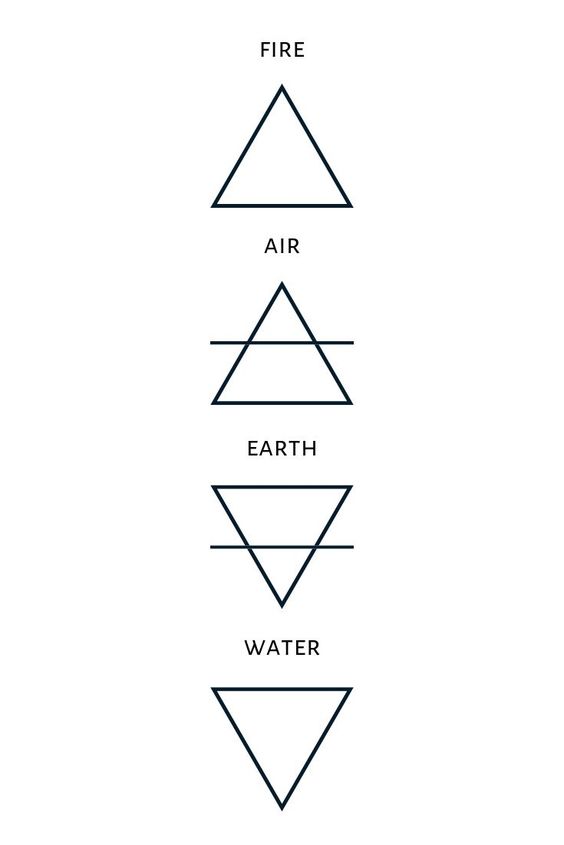
EARTH, AIR, FIRE, WATER, IRON, COPPER… wait!? Are these all elements?
The periodic table can be daunting for both children and adults alike. In this document, we will provide a brief background on the table and offer insights into the names and symbols of the elements. With the help of a few language tricks and an understanding of the different thought processes of those who named the elements, we aim not only to comprehend the stories they tell but also to guide visitors to the same conclusions, building their confidence and expanding their science capital.
What’s in an Element?
An element is a substance that consists of only one type of atom and, either alone or in combination with other elements, makes up all matter in the universe. An element itself cannot be broken down through chemical reactions; only through nuclear means can an element be changed. This is the current scientific understanding of what an element is.
Years ago, there were thought to be only four elements: fire, water, earth, and air. These four were believed to make up everything in the physical world. This concept of the four elements was not limited to chemistry but also found acceptance in biology and other areas of science as the four cornerstones, for example the four humours or temperments. The belief was that everything could be understood in terms of these four attributes or the different aspects of nature that correlated or related to each one.
A standard periodic table now will have typically 118 different elements a far cry from 4. It was due to the increase of what we understood to be the fundamental elements of the universe and the desire to find a way to present them that led us towards the current incarnations of the periodic tables. Although the four classical elements still hold a sliver of truth to them as they seem to reflect the common states of matter in which we find most things on our planet.
In 1869, Russian chemist Dmitri Mendeleev published his first periodic table. He arranged his elements in a periodic way, relating to the vertical columns of the table. He noticed that the properties of the elements he observed were related periodically to their atomic mass and arranged them as such, into his periods. Although there were often gaps in certain parts of his table when he first proposed it, Mendeleev responded by saying the missing elements did exist; they were just yet to be discovered. Even though they were yet to be discovered, he deduced the atomic masses of the missing elements and then inferred their properties. When they were finally discovered, he was proved correct with outstanding accuracy.
Despite Mendeleev’s accurate predictions of missing elements, they were unfortunately left without names. The naming process of the elements resembled the Linnaeus naming system for living organisms, with many names referring to where they were found or synthesized. On the table, each element and its details are represented within a square or oblong, arranged according to their properties/atomic number.
Different variations of the periodic table contain different amounts of information, but the general standard includes the elemental name, symbol, atomic number, and atomic mass. In this document, we will focus on the elemental number and elemental symbol, as the other details, while important for chemical reactions and the application of the elements, can easily become overwhelming for our intended audience.
The names of elements usually carry some story or snippet of information relating to the element itself. Please refer to the appendices for the full list of etymology of the elements. The names themselves fall into a few different categories for origins, with many deriving from Greek, Latin, or Arabic.
- Some are named after famous people or scientists, usually someone who either helped find or synthesize the element (e.g., Curium, Mendelevium, Nobelium).
- Some are named after where they were found or synthesized (e.g., Francium, Polonium, Strontium).
- Some offer sometimes cryptic references to either what the element does, its purpose, or its superficial properties. These references are at times related to mythological figures or cultural memes (e.g., Hydrogen, Phosphorus, Tantalum).
Hydrogen = Hydro Gensis = Water Maker
Phosphorus = Light Porous = Glows with light
Tantalum = Tantalus, cursed to be just out of reach of food and water = Tantalizing = Difficult to get just the correct situations
 Anansci; Thinking About Words
Leave a comment